

Are you searching for an incredibly flavorful and effortlessly delicious potato side dish that captures the essence of Mediterranean cuisine? Look no further! This delightful Greek Lemon Potatoes recipe offers a perfect blend of tangy lemon, savory herbs, and tender, melt-in-your-mouth potatoes that will elevate any meal and quickly become a family favorite.
Whether you’re a long-time enthusiast of classic baked potatoes or eager to explore new, vibrant flavors, these oven-roasted Greek lemon potatoes are truly a game-changer. Unlike many potato preparations, this recipe focuses on achieving a soft, dense, and luxuriously creamy texture rather than a crispy exterior, allowing the rich, aromatic broth to deeply infuse every bite.

Greek Lemon Potatoes: An Authentic Taste of the Mediterranean
When it comes to versatile side dishes, the humble potato reigns supreme. From refreshing dill potato salad perfect for summer picnics to comforting, oven-roasted melting potatoes, the possibilities are truly endless. However, these Greek Lemon Potatoes stand out with their bright, zesty, and distinctly savory profile that’s both invigorating and deeply satisfying. The lemon flavor is prominent but beautifully balanced, adding a refreshing tang without ever overpowering the earthy potato and herb notes.
Crafted primarily with starchy russet potatoes and baked in a flavorful broth, this method yields a uniquely dense, creamy texture that practically melts in your mouth. This rich consistency makes them an ideal companion for a wide array of main courses, from succulent chicken and hearty fish dishes to lamb and pork. The secret lies in slow roasting the potatoes submerged in a savory lemon-infused broth, allowing them to absorb all the wonderful aromas and flavors, resulting in a side dish that’s both comforting and gourmet.
Essential Ingredients for Perfect Greek Lemon Potatoes
Creating these tender and flavorful Greek lemon potatoes requires a handful of simple, readily available ingredients. The quality of each component contributes to the overall deliciousness of the final dish. Here’s what you’ll need:
- Russet Potatoes: The star of the dish, chosen for their starchy texture that becomes wonderfully soft and absorbent when cooked.
- Vegetable Oil: Helps coat the potatoes and ensures even cooking, contributing to a tender interior. Olive oil can also be used for a more authentic Mediterranean flavor.
- Lemons or Fresh Lemon Juice: The essential ingredient that provides the signature bright, tangy flavor. Freshly squeezed lemon juice is always recommended for the best taste.
- Salt: Enhances all the other flavors in the dish. Adjust to your preference.
- Dried Oregano or Rosemary: Classic Mediterranean herbs that impart a savory, aromatic depth. Oregano is quintessential for Greek flavors, while rosemary offers a slightly different, pungent note.
- Ground Black Pepper: Adds a hint of warmth and subtle spice.
- Chicken Broth or Chicken Stock: The liquid base for braising the potatoes, infusing them with savory flavor and creating that desirable tender texture. Vegetable broth can be substituted for a vegetarian option.
Mastering Easy Slicing and Potato Preparation
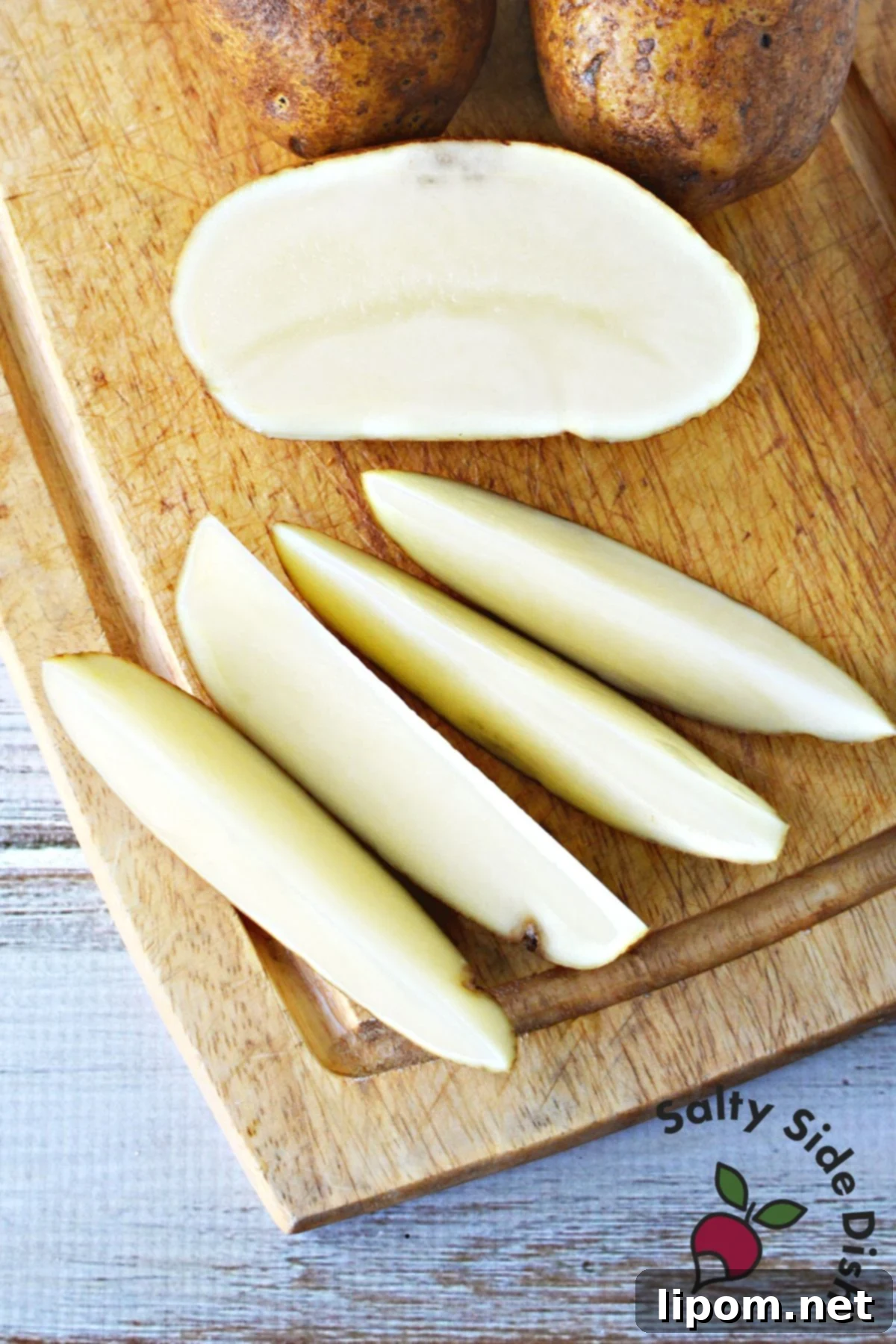
Proper potato preparation is key to ensuring even cooking and optimal flavor absorption in your Greek lemon potatoes. To begin, thoroughly wash and scrub each russet potato. While you can peel them for a smoother texture, leaving the skin on adds nutritional value and a rustic charm – just ensure it’s clean!
Once cleaned, take each potato and cut it lengthwise in half. This creates two stable pieces. From each half, you can then cut lengthwise again, dividing it into approximately four equal-sized wedges. The goal is to create uniform pieces, ideally about 1 to 1.5 inches thick at their widest point. This consistent sizing is crucial; it guarantees that all potato wedges will cook at roughly the same rate, preventing some from being undercooked while others turn to mush. Uniform wedges result in a perfectly tender and consistently flavorful dish, making every bite as enjoyable as the last.
Fresh Lemons vs. Bottled Lemon Juice: Which is Best?
The bright, acidic kick of lemon is fundamental to the authentic taste of Greek lemon potatoes. But when you’re preparing this dish, a common question arises: should you use fresh lemons or is bottled lemon juice an acceptable substitute?
While fresh lemons always offer the most vibrant and nuanced citrus flavor, complete with aromatic zest oils, bottled lemon juice can certainly be used in a pinch without compromising the dish’s overall deliciousness. If you opt for bottled lemon juice, a good rule of thumb is to substitute two tablespoons of bottled lemon juice for every one medium-sized fresh lemon called for in the recipe. However, remember that bottled juice often lacks the depth and freshness that comes from freshly squeezed lemons, so if possible, always reach for fresh. For an extra boost of citrus aroma, consider grating a bit of lemon zest into your mixture, even if you’re using bottled juice.

Crafting the Perfect Batch: How to Make Greek Lemon Potatoes
Making these tender Greek lemon potatoes is a straightforward process that yields incredibly rewarding results. Follow these simple steps for a side dish that’s sure to impress:
- Preheat the Oven and Prepare the Pan: Start by preheating your oven to 400°F (200°C). While the oven heats, lightly grease a 9×13-inch baking pan with nonstick cooking spray or a drizzle of olive oil. This prevents sticking and ensures easy serving.
- Prepare the Potatoes and Season: Wash and cut your russet potatoes into uniform wedges as described earlier. Place these wedges in a large mixing bowl. Drizzle them with vegetable oil (or olive oil) and generously season with salt, dried oregano (or rosemary), and ground black pepper. Toss everything together until the potatoes are evenly coated with the oil and spices.
- Combine the Liquids: In a separate bowl or measuring cup, combine the chicken broth (or stock) and freshly squeezed lemon juice. Stir briefly to ensure the flavors are well mixed. This liquid will be the flavorful bath for your potatoes.

- Arrange and Bake: Carefully arrange the seasoned potato wedges in a single layer in your prepared baking dish. Aim for as much surface area contact as possible; a single layer promotes even cooking and browning. Pour the lemon-infused broth mixture evenly over the potatoes. It’s important for the potatoes to sit in the broth, so try your best to arrange them without too much overlap. A slight overlap is acceptable, but avoid piling them high. Bake in the preheated oven on an oven rack for 45-55 minutes, or until the potatoes are beautifully golden around the edges and fork-tender throughout. The liquid should be mostly absorbed, leaving behind a rich, flavorful glaze.
- Serve Immediately: These Greek lemon potatoes are best served hot and fresh from the oven to truly savor their tender texture and vibrant flavors. A spatula or serving spoon works perfectly for scooping them out of the pan. Before serving, be sure to drizzle any remaining delicious pan juices over the top of the potatoes – this adds an extra layer of moisture and incredible flavor to this simple Greek lemon potatoes recipe. Garnish with a sprinkle of fresh parsley or a lemon wedge for an appealing presentation.

Choosing the Best Potatoes for Greek Lemon Potatoes
The type of potato you select plays a significant role in the final texture and success of your Greek lemon potatoes. While some potato varieties are better suited for crisping, this recipe thrives on potatoes that become tender and absorb flavors beautifully. Here are the top choices:
- Russet Potatoes: Often considered the gold standard for this dish, russets are highly starchy potatoes. This high starch content allows them to break down slightly during cooking, resulting in that wonderfully soft, fluffy, and dense texture that defines these Greek potatoes. Their porous nature also makes them exceptional at soaking up the lemony, garlicky, and herbaceous marinade and broth.
- Yukon Gold Potatoes: An excellent alternative to russets, Yukon Golds offer a slightly more buttery flavor and a texture that falls between waxy and starchy. They hold their shape a bit better than russets but still become incredibly tender and readily absorb the bright lemon and herb flavors from the cooking liquid. Their natural creaminess enhances the dish beautifully.
- Idaho Potatoes: Very similar to Russet potatoes, Idaho potatoes are also high in starch and will deliver a comparable tender and absorbent quality. They consistently turn beautifully soft and flavorful when cooked in this manner, making them a reliable choice for achieving that desired Greek lemon potato texture.

Potatoes to Avoid: For this specific recipe, it’s best to steer clear of waxy potato varieties like red potatoes, new potatoes, or fingerling potatoes. While delicious in other applications, their firm, waxy texture means they don’t absorb flavors as effectively and won’t achieve the signature soft, “melt-in-your-mouth” consistency desired for traditional Greek lemon potatoes. You might end up with a less flavorful and denser result that doesn’t quite fit the profile of this dish.
Enhancing Flavor: Greek Potato Seasoning Options
While the core recipe for Greek lemon potatoes is delicious as is, there are several ways to customize and enhance its aromatic profile, especially through seasoning. The classic combination of oregano, salt, and pepper provides a fantastic base, but you can always elevate it further.
If you’re a devoted garlic lover, incorporating fresh, minced garlic is highly recommended. Garlic adds a pungent, robust, and slightly intense layer of flavor that beautifully complements the tang of the lemon and the earthiness of the oregano. It creates a wonderfully fragrant aroma that will fill your kitchen and tantalize your taste buds. Typically, 2-3 cloves of minced garlic mixed with the potatoes and oil are sufficient, but feel free to adjust to your preference.
Beyond garlic, consider adding other traditional Greek herbs. A touch of dried rosemary or thyme can introduce additional savory notes. For a brighter finish, a sprinkle of fresh parsley after baking adds a pop of color and herbaceous freshness. Don’t be afraid to experiment to find your perfect flavor balance!

Fresh vs. Dried Herbs: Making the Switch
Absolutely! While dried herbs are convenient and consistent, fresh herbs can provide an extra layer of vibrancy and intensity to your Greek lemon potatoes. Fresh oregano, chopped rosemary, or even finely minced cloves of garlic can be used in place of their dried counterparts. As a general rule, use three times the amount of fresh herbs as dried (e.g., 3 teaspoons fresh oregano for 1 teaspoon dried). For fresh garlic, simply mince and add along with the oil and other seasonings.
Understanding the Texture: Do Greek Lemon Potatoes Have a Crispy Shell?
It’s important to set expectations regarding the texture of this particular Greek-style potato recipe. Many popular potato dishes aim for a golden, crunchy exterior, but this version of Greek lemon potatoes does not feature a crispy shell. Instead, its charm lies in an entirely different, yet equally appealing, texture profile.
Traditional Greek lemon potatoes, especially when prepared in the classic style with ample broth, are designed to be tender and succulent, absorbing the rich flavors of their cooking liquid. The extended braising and roasting in chicken broth and lemon juice results in a truly tender, melt-in-your-mouth texture that is incredibly comforting. The potatoes become dense and creamy on the inside, infused with savory and tangy notes, creating a luscious side dish that perfectly complements main courses. So, if you’re looking for a crispy potato side, this might not be it, but if you crave deeply flavored, wonderfully soft potatoes, you’ve found your recipe!
Scaling Up: Cooking Greek Lemon Potatoes for a Crowd
These Greek lemon potatoes are so popular, you’ll often find yourself wanting to make a larger batch for gatherings or meal prep. Luckily, scaling this recipe is quite easy. The general rule is to avoid overcrowding your baking pan, as this can steam the potatoes rather than roast them, impacting their texture and flavor.
For a larger crowd, it’s recommended to prep two 9×13-inch baking pans instead of trying to cram everything into one. Remember, each medium-sized potato yields approximately eight wedges, so you can easily calculate how many potatoes you’ll need based on your expected serving size. A good estimate is about half a potato per person for a side dish, meaning four potatoes per pan can comfortably serve 4-6 people generously. Just ensure each pan has enough broth to braise the potatoes and they are spread out in as close to a single layer as possible. Cooking multiple pans simultaneously might slightly increase total baking time, so always check for fork-tenderness before removing them from the oven.

Perfect Pairings: What to Serve with Lemon Potatoes
The bright, savory, and tangy profile of Greek lemon potatoes makes them an incredibly versatile side dish that complements a wide variety of main courses. Their robust flavor stands up well to hearty meats, while their refreshing zest brightens lighter fare. Here are some ideal pairings:
- Grilled or Oven Baked Chicken: Whether it’s a simple roasted chicken, marinated chicken breasts, or flavorful chicken skewers, the mild and adaptable flavor of chicken pairs beautifully with the zest and savory herbs of the potatoes.
- Lamb: A quintessential pairing in Greek cuisine. Grilled lamb chops, slow-roasted leg of lamb, or tender braised lamb dishes are exceptional with lemon potatoes. The earthy, sometimes gamey flavors of lamb are perfectly balanced by the bright citrus and aromatic herbs.
- Fish and Seafood: For a lighter meal, grilled or baked fish such as salmon, swordfish, snapper, or cod are fantastic. The citrusy notes in the potatoes naturally enhance the freshness and delicate flavors of seafood, creating a harmonious Mediterranean-inspired plate.
- Pork: The naturally sweet and savory notes of pork, whether in grilled pork chops, a tender roasted pork tenderloin, or slow-cooked pulled pork, create a delightful contrast with the tangy, herbaceous lemon potatoes.
- Beef: Heartier beef dishes also find a great companion in these potatoes. Consider serving them with Air Fryer Steak Bites, grilled beef kebabs seasoned with Mediterranean spices, or even a simple pan-seared steak for a satisfying and flavorful meal.
- Vegetarian Options: These potatoes also pair wonderfully with grilled halloumi cheese, a robust Greek salad, or alongside other roasted vegetables like zucchini and bell peppers.
Important Note: Can potatoes with green skin be eaten?
While many potato skins are edible and delicious, it’s crucial to be aware of green areas on potatoes. Green skin or spots indicate the presence of solanine, a natural glycoalkaloid that can be toxic in large amounts. Solanine develops when potatoes are exposed to light. It’s best to avoid eating these green parts. If you notice greening, simply peel or cut off and discard the affected sections before cooking to ensure your potatoes are safe to eat.
Explore More Delicious Potato Recipes
Potatoes are a culinary staple for good reason – their versatility means endless possibilities for incredible side dishes. If you’ve enjoyed these Greek lemon potatoes and are looking for more creative ways to enjoy this beloved vegetable, be sure to explore more of my favorite side dish recipes. Get ready to add new flavors and textures to your meal rotation!
- Funeral Potatoes with Hashbrowns: A comforting and creamy casserole, funeral potatoes are one of the most beloved ways to transform frozen hashbrowns into a delightful dish.
- Scalloped Potatoes and Ham: This hearty and flavorful take on a traditional holiday side dish combines thinly sliced potatoes baked in a rich, creamy sauce with savory pieces of ham.
- Steakhouse Cream Cheese Mashed Potatoes: You simply cannot go wrong with these luxurious, creamy mashed potatoes. Infused with cream cheese, they achieve an irresistible richness and velvety smooth texture, reminiscent of your favorite steakhouse.
- Stuffed Hassleback Potatoes: Discover the magic of Hasselback potatoes! With thin slices baked to crispy perfection and stuffed with your favorite goodness, they’re both visually impressive and incredibly tasty.
- Hellmann’s Potato Salad: There are countless ways to prepare potato salad, but this classic version using Hellmann’s mayonnaise offers a timeless and universally loved flavor profile.
- Complementary Vegetable Sides: These Greek lemon potatoes also pair wonderfully with other vegetable dishes like Green Beans Almondine (which can include Greek-friendly feta cheese), or simple Southern-style fresh green beans for a complete and balanced meal.


Tender Greek Lemon Potatoes
Equipment
-
9 x 13 Baking Dish
Ingredients
- 4 russett potatoes cut into 8 wedges
- 1/3 cup vegetable oil
- 2 fresh lemons juiced
- 1 teaspoon salt
- 1 teaspoon dried oregano
- 1/4 teaspoon ground black pepper
- 3 cups chicken broth Chicken stock can be used as a substitution
Instructions
-
Start by Preheating the Oven: Turn it up to 400°F and then take a 9×13 baking pan, greasing it with nonstick cooking spray. Once that’s done, set it aside for later.
-
Prepare the Potatoes: Grab each potato and cut it in half. Then take each half and slice it into 4 equal wedges. There will be 8 wedges total from each potato. Try to keep them even and uniform for on-time cooking.
-
Place your potato wedges into a mixing bowl. Add your preferred oil and all spices, mixing well to ensure they’re evenly coated.
-
Mix chicken broth and lemon juice. This blend will give your potatoes a rich, tangy flavor.
-
Arrange the Potatoes: Carefully place the potatoes in a single layer in the greased baking dish. Pour the chicken broth mixture over the top, making sure the potatoes are sitting in the broth. You may need to play around with the wedges to get them just right. A little overlap is fine; just do your best to make it even.
-
Bake to Perfection: Put the lemon potatoes in the oven and bake them for 45-55 minutes. You’ll know they’re ready when they’re fork-tender and smell incredible.
-
Final Touches: If you like, add a little extra cracked pepper and salt on top for added seasoning.
-
Serve and Enjoy: Dish up the potatoes hot, and if desired, drizzle a little extra broth on top for that final touch.
Video
Notes
SERVINGS: This recipe utilizes four medium-sized potatoes, each yielding approximately eight wedges, totaling about 32 potato slices. This amount generously accounts for at least half a potato per person. If you plan to serve a larger group and require more, it is highly recommended to use a second casserole dish to avoid overcrowding. Piling potatoes on top of each other can lead to uneven cooking and a less desirable texture.
PAIRING SUGGESTIONS: These versatile lemon potatoes are best paired with Mediterranean-inspired main dishes such as roasted chicken, succulent pork tenderloin, grilled steak, or baked fish. Their bright, savory flavor complements a wide range of proteins beautifully.
Nutrition
Nutritional Disclaimer: The nutritional data provided here is auto-calculated and intended for your convenience only. As it’s generated via automation, its accuracy may be compromised. For precise nutritional insight, please compute the values utilizing the actual ingredients in your recipe through your chosen nutrition calculator or application.
Sharing of this recipe is encouraged and appreciated. Copying of full recipe to any social media is prohibited.
Did You Make This Recipe?
Make sure to follow Salty Side Dish on Pinterest and rate the recipe here and make sure to leave a comment below!